

 Image 1 of 1
Engine Wash
Engine Steam Wash and Finishing
Service Overview
Purpose: Safely remove grease, oil, grime, and road contaminants from the engine bay using pressurized steam, followed by a detailed finishing process to protect components and restore a clean, showroom appearance.
Suitable vehicles: Cars, trucks, SUVs, motorcycles — ideal for engines with buildup but no active electrical faults or exposed sensors.
Process Steps
Pre-inspection
Check for leaks, damaged hoses, cracked wiring, or loose connectors.
Identify sensitive electrical components and exposed sensors.
Note any existing mechanical issues and obtain customer approval before proceeding.
Protection & Preparation
Cover the battery terminals, exposed fuse boxes, air intake, alternator, and any open electrical connectors with waterproof protective covers.
Remove or secure covers on delicate components as needed.
Disconnect battery if recommended for the specific vehicle and complexity of access.
Degreasing (if required)
Apply a pH-balanced, biodegradable degreaser to heavy oil and grease deposits.
Allow dwell time per product instructions to break down stubborn contamination.
Steam Cleaning
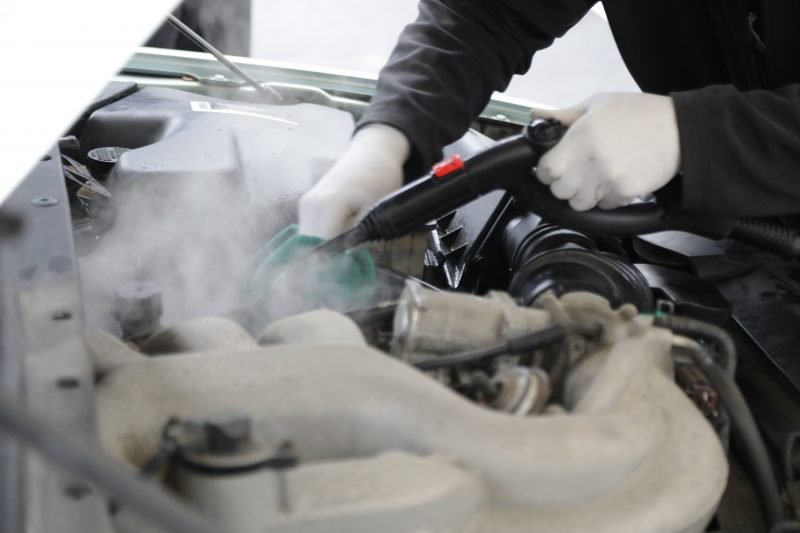
Use a professional steam-cleaning system operating at controlled temperature and pressure to dissolve and lift grime without excessive water intrusion.
Work systematically from top to bottom and back to front, flushing away loosened contaminants.
Avoid direct prolonged steam on sensitive sensors and electrical connectors; maintain safe distance and angle.
Rinse & Dry
Rinse with controlled low-pressure water or use the steam unit’s rinse mode to remove residues.
Use compressed air or blowers to evacuate water from crevices, electrical connectors, and harnesses.
Wipe remaining surfaces with microfiber towels.
Finishing & Protecting
Apply a non-greasy, high-temperature engine bay dressing (silicone-free or formulated for under-hood use) to plastics, hoses, and trim to restore appearance without attracting dirt.
For metal components, use a light protective spray to inhibit corrosion where appropriate.
Reinspect for missed spots, ensure all covers are removed or reinstalled, and reconnect battery if disconnected.
Final Inspection & Customer Walkthrough
Verify all electrical systems are functioning.
Show the customer the cleaned engine bay and explain any issues found during the service.
Provide aftercare advice (avoid deep water exposure for 24–48 hours; report any warning lights immediately).
Safety & Precautions
Only perform on cool engines; allow the engine to reach near-ambient temperature to avoid thermal shock.
Do not apply steam to open electronic modules, sensors, or ECMs.
Technicians must wear heat-resistant gloves and eye protection.
Use equipment maintained to manufacturer specifications to control steam temperature and pressure.
Estimated Time & Pricing (sample)
Basic steam clean and finish: 45–90 minutes.
Heavy degrease and deep detail: 90–150 minutes.
Pricing varies by vehicle size and contamination level; provide a written estimate after inspection.
Why Choose Professional Steam Cleaning
Deep clean without harsh chemicals or excessive water.
Safe for most engine components when performed by trained technicians.
Improves engine bay appearance, aids in identifying leaks, and helps preserve component life.
Aftercare Tips for Customers
Avoid driving through deep water for 24–48 hours after service.
Regular light cleaning every 3–6 months helps prevent heavy buildup.
Report any new dashboard warnings or unusual electrical behavior immediately.
Sparkle N'Shine Auto Detailing guarantees workmanship and will document pre-service condition. If you have specific concerns or require ECU-sensitive vehicles to be handled differently, notify us prior to service.
Engine Steam Wash and Finishing
Service Overview
Purpose: Safely remove grease, oil, grime, and road contaminants from the engine bay using pressurized steam, followed by a detailed finishing process to protect components and restore a clean, showroom appearance.
Suitable vehicles: Cars, trucks, SUVs, motorcycles — ideal for engines with buildup but no active electrical faults or exposed sensors.
Process Steps
Pre-inspection
Check for leaks, damaged hoses, cracked wiring, or loose connectors.
Identify sensitive electrical components and exposed sensors.
Note any existing mechanical issues and obtain customer approval before proceeding.
Protection & Preparation
Cover the battery terminals, exposed fuse boxes, air intake, alternator, and any open electrical connectors with waterproof protective covers.
Remove or secure covers on delicate components as needed.
Disconnect battery if recommended for the specific vehicle and complexity of access.
Degreasing (if required)
Apply a pH-balanced, biodegradable degreaser to heavy oil and grease deposits.
Allow dwell time per product instructions to break down stubborn contamination.
Steam Cleaning
Use a professional steam-cleaning system operating at controlled temperature and pressure to dissolve and lift grime without excessive water intrusion.
Work systematically from top to bottom and back to front, flushing away loosened contaminants.
Avoid direct prolonged steam on sensitive sensors and electrical connectors; maintain safe distance and angle.
Rinse & Dry
Rinse with controlled low-pressure water or use the steam unit’s rinse mode to remove residues.
Use compressed air or blowers to evacuate water from crevices, electrical connectors, and harnesses.
Wipe remaining surfaces with microfiber towels.
Finishing & Protecting
Apply a non-greasy, high-temperature engine bay dressing (silicone-free or formulated for under-hood use) to plastics, hoses, and trim to restore appearance without attracting dirt.
For metal components, use a light protective spray to inhibit corrosion where appropriate.
Reinspect for missed spots, ensure all covers are removed or reinstalled, and reconnect battery if disconnected.
Final Inspection & Customer Walkthrough
Verify all electrical systems are functioning.
Show the customer the cleaned engine bay and explain any issues found during the service.
Provide aftercare advice (avoid deep water exposure for 24–48 hours; report any warning lights immediately).
Safety & Precautions
Only perform on cool engines; allow the engine to reach near-ambient temperature to avoid thermal shock.
Do not apply steam to open electronic modules, sensors, or ECMs.
Technicians must wear heat-resistant gloves and eye protection.
Use equipment maintained to manufacturer specifications to control steam temperature and pressure.
Estimated Time & Pricing (sample)
Basic steam clean and finish: 45–90 minutes.
Heavy degrease and deep detail: 90–150 minutes.
Pricing varies by vehicle size and contamination level; provide a written estimate after inspection.
Why Choose Professional Steam Cleaning
Deep clean without harsh chemicals or excessive water.
Safe for most engine components when performed by trained technicians.
Improves engine bay appearance, aids in identifying leaks, and helps preserve component life.
Aftercare Tips for Customers
Avoid driving through deep water for 24–48 hours after service.
Regular light cleaning every 3–6 months helps prevent heavy buildup.
Report any new dashboard warnings or unusual electrical behavior immediately.
Sparkle N'Shine Auto Detailing guarantees workmanship and will document pre-service condition. If you have specific concerns or require ECU-sensitive vehicles to be handled differently, notify us prior to service.